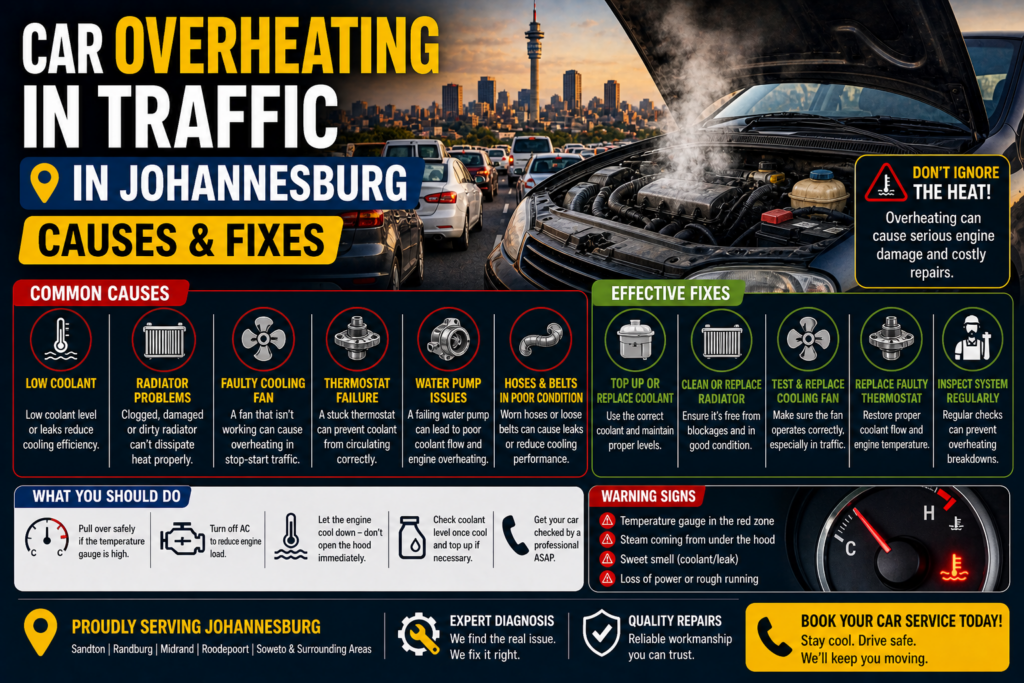
Car Overheating in Traffic in Johannesburg – Causes & Fixes
If your car starts overheating in traffic but seems fine on the open road, you’re not alone. This is a very common problem in Johannesburg, especially with daily stop-start driving and long periods of idling.
Many drivers ignore the early signs, but overheating in traffic usually means something in the cooling system is not working properly — and it can lead to serious engine damage if left unchecked.
We provide mobile diagnostics across Johannesburg to identify overheating problems quickly and prevent expensive engine repairs.
When your car is moving at higher speeds, airflow helps cool the radiator. However, in traffic, your vehicle relies heavily on its cooling system components to maintain safe engine temperatures.
If one of these components fails or becomes inefficient, overheating usually appears first during slow driving or when the car is stationary.
Cooling Fan Not Working Properly
The radiator fan plays a critical role when your car is not moving. It pulls air through the radiator to help cool the engine when there is no natural airflow.
If the fan fails, runs intermittently, or operates too slowly, the engine temperature will rise quickly in traffic.
This is one of the most common reasons cars overheat while idling or in slow traffic conditions.
Low Coolant Levels or Leaks
Coolant absorbs heat from the engine and transfers it to the radiator. If coolant levels are low, the system cannot regulate temperature effectively.
Leaks in hoses, the radiator, or other components can cause coolant loss over time, leading to overheating — especially in traffic where the system is under more stress.
If you suspect a leak, it should be checked immediately before it leads to serious engine damage.
Thermostat Stuck Closed
The thermostat controls coolant flow between the engine and radiator. If it becomes stuck closed, coolant cannot circulate properly, causing heat to build up rapidly.
This issue may not always show at high speeds but becomes more noticeable in traffic when cooling demand increases.
A faulty thermostat is a relatively small part but can cause major overheating problems if ignored.
Blocked or Dirty Radiator
Over time, dirt, debris, and internal buildup can reduce the radiator’s ability to transfer heat. This limits cooling performance, especially when airflow is already reduced in traffic.
External blockage (like dust and debris) and internal corrosion both contribute to poor cooling efficiency.
Regular servicing helps prevent radiator blockages from becoming a major issue.
Why Overheating in Traffic Gets Worse Over Time
Cooling system problems rarely fix themselves. A small issue like low coolant or a weak fan can gradually become a major problem, especially with daily traffic driving.
Over time, overheating can lead to warped cylinder heads, blown head gaskets, and severe engine damage.
Fixing the issue early prevents costly repairs later.
What To Do If Your Car Overheats in Traffic
If your temperature gauge rises above normal, switch off the air conditioning and turn on the heater. This helps draw heat away from the engine.
If the temperature continues rising, pull over safely and switch off the engine. Do not continue driving while overheating, as this can cause serious damage.
Never open the radiator cap while the engine is hot, as this can cause burns.
If the issue persists, contact a professional or refer to our car overheating Johannesburg guide.
Overheating Problems Across South Africa
Traffic conditions, climate, and vehicle usage all affect how cooling systems perform. Overheating in traffic is common in all major cities where vehicles spend long periods idling.
If you travel outside Johannesburg, our network also supports drivers through our Cape Town mobile mechanic service and Durban mobile mechanic service.
These cross-links strengthen your authority network naturally.
Don’t Ignore Overheating in Traffic
Overheating is one of the fastest ways to damage your engine. Fixing the issue early helps prevent breakdowns, costly repairs, and long-term damage.
We provide mobile inspections across Johannesburg to diagnose overheating problems quickly and get you back on the road safely.
Frequently Asked Questions
Why does my car only overheat in traffic?
Because airflow is reduced, your car relies on the cooling fan and system components. If these fail, overheating appears in traffic first.
Can I drive with an overheating engine?
No. Driving while overheating can cause serious engine damage and should be avoided.
Can low coolant cause overheating?
Yes. Low coolant reduces the system’s ability to absorb and transfer heat.
Can a mobile mechanic fix overheating problems?
Yes. Many cooling system issues can be diagnosed and repaired on-site.
Also read:
Mobile Mechanic Johannesburg |
Car Overheating Johannesburg |
Car Diagnostics Johannesburg |
Emergency Mobile Mechanic Johannesburg
Why Your Car Only Overheats at Low Speeds
Many drivers get confused when their car temperature stays normal on the highway but rises quickly in traffic. This happens because the cooling system works differently depending on speed.
At higher speeds, airflow naturally passes through the radiator, helping remove heat from the engine. In traffic, however, your vehicle relies almost entirely on the cooling fan and internal system components to keep temperatures under control.
If the fan is weak, the coolant flow is restricted, or the radiator is partially blocked, the system cannot keep up with the heat — and the temperature begins to climb.
This is why overheating in traffic is often the first visible sign of a cooling system problem.
Early Warning Signs Before Overheating Happens
Overheating rarely happens suddenly without warning. In most cases, there are early signs that appear days or even weeks before the problem becomes serious.
One of the first signs is a slight increase in normal operating temperature, especially in traffic. The temperature gauge may sit slightly higher than usual but still below the red zone.
You may also notice the radiator fan running more frequently or staying on longer than normal after switching off the engine.
Other warning signs include a coolant smell, visible coolant residue under the bonnet, or the need to top up coolant more often than usual.
If your dashboard warning light appears, refer to our engine warning light Johannesburg guide for more details.
What Happens If You Ignore Overheating
Continuing to drive with an overheating engine is one of the fastest ways to cause serious mechanical damage. Heat affects critical engine components very quickly.
The cylinder head can warp due to excessive heat, which leads to loss of compression and poor engine performance. In more severe cases, the head gasket can fail, allowing coolant and oil to mix.
Once this happens, repairs become significantly more expensive and time-consuming. What could have been a simple cooling system repair turns into major engine work.
This is why it’s always better to stop and diagnose the issue early instead of continuing to drive.
How Traffic Conditions in Johannesburg Make It Worse
Johannesburg’s driving conditions put extra strain on cooling systems. Long periods of idling, stop-start traffic, and hot weather all increase engine temperature.
Vehicles that are used mainly for short trips often don’t get enough airflow or cooling cycles to keep the system operating efficiently. Over time, this accelerates wear on cooling components.
Dust and debris from urban roads can also clog radiators externally, reducing airflow even further.
These combined factors make traffic overheating more common in Johannesburg than many drivers expect.
Don’t Let Traffic Overheating Turn Into Engine Damage
If your car overheats in traffic, it’s already a warning sign that something in the cooling system needs attention. Fixing it early helps prevent major engine damage and costly repairs.
We provide mobile diagnostics across Johannesburg to identify overheating problems properly and get your vehicle running safely again.