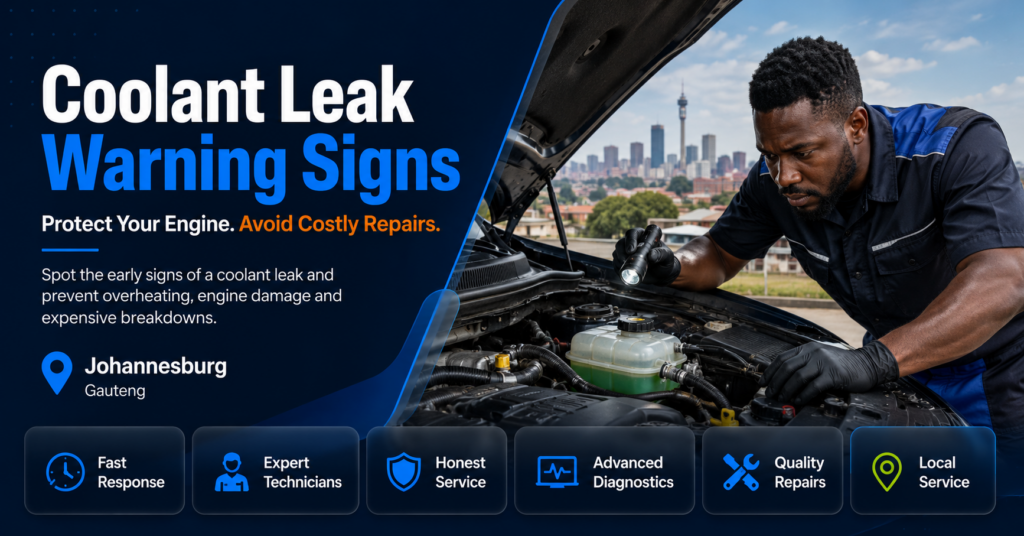
Coolant Leak Warning Signs in Johannesburg
A coolant leak is one of the most common causes of vehicle overheating, roadside breakdowns and expensive engine repairs. While some leaks begin as small drips that are easy to overlook, they almost always become worse if left unattended. Losing coolant means your engine can no longer regulate its operating temperature correctly, increasing the risk of overheating and internal engine damage.
Johannesburg’s combination of daily commuting, heavy traffic congestion and warm summer temperatures places additional stress on cooling systems. Components such as hoses, radiators, expansion tanks and water pumps naturally wear with age, and even a minor leak can quickly become a major problem when the engine is working hard in slow-moving traffic.
Many drivers simply top up the coolant whenever the level drops without investigating why it keeps disappearing. Although this may temporarily solve the symptom, it does not fix the underlying problem. Continuing to drive with a coolant leak can eventually result in overheating, warped cylinder heads, blown head gaskets or complete engine failure.
Knowing what warning signs to look for allows you to act early, reducing repair costs and helping to avoid unexpected breakdowns.
Why Coolant Leaks Should Never Be Ignored
The cooling system is responsible for removing excess heat from the engine while maintaining the correct operating temperature. Coolant continuously circulates through the engine block, cylinder head, radiator and heater core, absorbing heat before releasing it through the radiator.
When coolant begins leaking from any part of the system, the total coolant volume gradually decreases. At first, the vehicle may appear to drive normally, but the reduced coolant level makes it increasingly difficult for the system to control engine temperature. The engine may begin running hotter than normal without immediately triggering the temperature gauge.
As the leak becomes larger, overheating may occur more frequently, particularly during stop-start traffic, long uphill drives or hot Johannesburg afternoons. Many drivers only realise the seriousness of the problem once steam begins coming from under the bonnet or the temperature gauge suddenly rises into the red zone.
Ignoring coolant leaks also places additional strain on other cooling system components. The water pump may work harder to circulate coolant, hoses may experience higher temperatures, and the radiator can become less effective because there is simply not enough coolant available to transfer heat efficiently.
If overheating continues unchecked, the consequences can become extremely expensive. Cylinder heads can warp, head gaskets may fail, engine oil can become contaminated with coolant, and severe internal engine damage may occur. Repairs at this stage are significantly more expensive than repairing a leaking hose or radiator earlier.
This is why any unexplained coolant loss should always be investigated rather than repeatedly topping up the expansion tank.
Common Warning Signs of a Coolant Leak
Not every coolant leak immediately leaves a large puddle underneath the vehicle. Many leaks begin very slowly, making them easy to overlook until additional symptoms begin appearing. Recognising the early warning signs often prevents larger repairs later.
One of the first indicators is the need to regularly top up the coolant reservoir. If the coolant level continues dropping even though there are no visible puddles, a slow leak is likely present somewhere within the system.
Drivers may also notice a sweet smell coming from the engine bay after driving. Coolant contains ethylene glycol or similar compounds that produce a distinctive sweet odour when leaking onto hot engine components. This smell often becomes more noticeable after parking the vehicle.
Other common warning signs include:
- Low coolant warning messages
- Temperature gauge climbing higher than normal
- Steam from the bonnet
- Visible coolant underneath the vehicle
- White or coloured residue around cooling components
- Heater not producing consistent warm air
- Frequent overheating during traffic
Even if these symptoms appear only occasionally, they should not be dismissed. Cooling system faults almost always worsen with continued use, especially if the vehicle is driven daily.
If your vehicle has already begun overheating, read our Car Overheating in Johannesburg guide for additional warning signs.
Coolant Hose Leaks
Cooling hoses are among the most common sources of coolant leaks because they operate under both heat and pressure every time the engine runs. Over time, rubber hoses naturally harden, crack, swell or become brittle as they are repeatedly exposed to high temperatures.
Small cracks often develop near hose clamps or bends where the rubber experiences constant movement. Initially these leaks may only appear once the engine reaches operating temperature and pressure builds inside the cooling system. Once the engine cools down again, the leak may temporarily disappear, making diagnosis more difficult.
Loose hose clamps can also allow coolant to seep out slowly. Although tightening or replacing a clamp may solve the immediate leak, the condition of the hose itself should always be inspected because aged rubber often continues deteriorating even after the clamp is replaced.
Drivers may notice small puddles beneath the front of the vehicle after parking, damp hoses within the engine bay, or dried coolant residue forming around hose connections. White, pink, green or orange deposits often indicate coolant has evaporated after escaping from the system.
Replacing worn hoses before they burst completely is far more affordable than repairing an overheated engine caused by sudden coolant loss.
Radiator Leaks
The radiator is responsible for removing heat from the coolant before it returns to the engine. Because it sits at the front of the vehicle, it is constantly exposed to stones, road debris, vibration and weather conditions. Over time, these factors can damage radiator cores, plastic end tanks and sealing points.
Small radiator leaks often begin around the seams where the plastic tanks join the aluminium core. Corrosion inside older radiators may also weaken the metal until tiny pinhole leaks develop. Initially these leaks may only release coolant when the system is under pressure, making them difficult to spot without careful inspection.
A leaking radiator often produces dried coolant stains across the radiator fins, visible moisture around the lower corners, or coolant dripping beneath the front bumper after parking. Drivers may also notice that the cooling fan runs more frequently because the radiator is no longer cooling efficiently.
As coolant continues escaping, engine temperatures gradually rise. During Johannesburg traffic congestion, reduced airflow through the radiator makes the problem even more noticeable because the cooling system relies heavily on both the radiator and cooling fan to maintain safe temperatures.
Because radiator leaks usually become progressively worse, early diagnosis helps avoid emergency overheating and costly engine repairs.
Water Pump Leaks
The water pump continuously circulates coolant throughout the engine and radiator. Like any mechanical component, it experiences wear over time. Internal bearings, seals and shafts gradually deteriorate, particularly on vehicles with higher mileage or those that have not received regular coolant changes.
When the internal seal begins failing, coolant may leak from a small drainage opening known as the weep hole. This leak is designed to indicate that the pump is reaching the end of its service life. Ignoring the warning often results in complete water pump failure later.
Drivers may notice coolant stains near the front of the engine, unusual squealing noises, coolant dripping underneath the timing cover area, or overheating that gradually becomes worse over time. Because the water pump also controls coolant circulation, a failing pump can cause poor cooling performance even before large leaks develop.
If the water pump eventually stops circulating coolant altogether, engine temperatures can increase extremely rapidly, particularly during traffic or hot weather conditions.
Routine inspections often identify water pump wear before complete failure leaves the vehicle stranded.
Thermostat Housing Leaks
Many modern engines use plastic thermostat housings to reduce weight and manufacturing costs. Unfortunately, these housings are exposed to constant heat cycles and pressure changes, making them susceptible to cracking as they age.
Hairline cracks often begin around mounting points, hose connections or gasket surfaces. Initially the leak may be extremely small, appearing only after the engine has reached full operating temperature. As the crack grows, coolant loss becomes increasingly noticeable.
Drivers frequently observe coolant residue around the thermostat housing, low coolant warnings, dampness near hose connections or intermittent overheating. Because thermostat housings are often positioned high within the engine bay, coolant may travel down other engine components before dripping onto the ground, making the true leak source difficult to identify without proper inspection.
Replacing a cracked thermostat housing early helps restore cooling system reliability and reduces the likelihood of overheating during Johannesburg’s busy commuting conditions.
Expansion Tank and Radiator Cap Problems
The expansion tank and radiator cap are often overlooked during cooling system inspections, yet they play an essential role in maintaining the correct coolant pressure. Modern cooling systems are designed to operate under pressure because pressurised coolant has a higher boiling point, allowing the engine to run efficiently without boiling the coolant during normal operation.
Over time, plastic expansion tanks become brittle due to repeated heating and cooling cycles. Fine cracks often develop around hose connections, moulded seams, or mounting points. Initially these cracks may only leak when the cooling system reaches full operating pressure, making them difficult to identify during a quick visual inspection.
Radiator caps can also fail internally. The pressure relief spring and rubber sealing surfaces gradually wear, preventing the cooling system from maintaining the correct pressure. As pressure escapes, coolant may overflow into the expansion bottle or evaporate slowly, creating the impression that coolant simply “disappears” over time.
Drivers often notice dried coolant residue around the expansion tank, moisture near the cap, or coolant collecting underneath the overflow bottle. Some vehicles repeatedly trigger low coolant warnings despite being topped up only days earlier.
Because these components are relatively inexpensive compared with major engine repairs, identifying faults early can prevent overheating and further cooling system damage.
Could It Be a Head Gasket Problem?
Although external coolant leaks are far more common, coolant can also be lost internally when a head gasket begins failing. The head gasket seals the engine block and cylinder head while keeping coolant, engine oil and combustion gases separated from one another.
When the gasket fails, coolant may enter the combustion chambers or mix with engine oil. In some cases there may be very little evidence of an external leak, making diagnosis more challenging.
Common warning signs include persistent overheating, white exhaust smoke after the engine has warmed up, unexplained coolant loss, bubbles appearing in the expansion tank, contaminated engine oil that looks milky, poor engine performance, rough running, or repeated overheating despite replacing other cooling system components.
Head gasket problems should never be ignored because continued driving can cause severe engine damage. Cylinder heads may warp, compression can be lost, and internal corrosion may develop if coolant contaminates engine oil.
Fortunately, most coolant leaks are caused by hoses, radiators, water pumps or plastic cooling components rather than head gasket failure, but proper diagnostics are necessary to confirm the exact cause.
Why Johannesburg Traffic Makes Cooling Problems Worse
Driving conditions in Johannesburg place considerable stress on vehicle cooling systems. Daily commuting often involves extended periods of stop-start traffic, long queues at intersections, slow-moving highways and frequent idling. Unlike highway driving, there is far less natural airflow passing through the radiator during these conditions.
When airflow decreases, the cooling fan becomes responsible for removing most of the engine’s heat. If coolant levels are already low because of a leak, the system becomes significantly less effective at controlling engine temperature.
Summer temperatures further increase the cooling system workload. Older vehicles with partially blocked radiators, worn water pumps or deteriorating hoses may cope adequately during winter but begin overheating once ambient temperatures rise.
Drivers who regularly travel between Fourways, Midrand, Sandton, Randburg and central Johannesburg often spend several hours each week in congested traffic. These operating conditions accelerate wear on cooling system components and make existing coolant leaks much more noticeable.
This is one reason why preventative inspections are especially valuable for vehicles used primarily for city commuting.
Safety Advice if You Suspect a Coolant Leak
If your vehicle begins overheating or you suspect coolant is leaking, safety should always come first. Continuing to drive while the engine temperature continues rising can result in catastrophic engine damage within a relatively short distance.
If the temperature gauge climbs unusually high, reduce engine load immediately and find a safe place to stop. Switch the engine off and allow it to cool naturally before inspecting the cooling system.
Never remove the radiator cap or expansion tank cap while the engine is hot. Cooling systems operate under pressure, and opening the cap prematurely can release boiling coolant and steam capable of causing severe burns.
If coolant levels are visibly low once the engine has cooled completely, topping up may allow the vehicle to be moved a short distance in some situations. However, repeated coolant loss indicates an underlying fault that still requires professional diagnosis.
If overheating continues after topping up coolant, stop driving and arrange assistance rather than risking permanent engine damage.
Mobile Cooling System Diagnostics in Johannesburg
Cooling system faults often produce similar symptoms, making accurate diagnosis essential. A vehicle may lose coolant because of a leaking hose, damaged radiator, faulty water pump, cracked expansion tank, thermostat housing failure or an internal engine problem. Replacing parts without confirming the source frequently results in unnecessary costs.
Mobile diagnostics allow the cooling system to be inspected directly at your home, workplace or roadside location. Pressure testing, visual inspections and diagnostic checks help identify the exact source of coolant loss so repairs can be planned correctly.
Professional diagnosis also helps identify related problems before they become larger repairs. Small coolant leaks often affect engine performance, fuel economy and emissions long before complete overheating occurs.
For cooling system problems that have already caused overheating, visit our Car Overheating in Traffic Johannesburg guide or learn more about our Car Diagnostics Johannesburg service.
If you’re located in northern Johannesburg, our Mobile Mechanic Fourways, Mobile Mechanic Midrand and Mobile Mechanic Sandton pages provide additional local information.
Need Help With a Coolant Leak in Johannesburg?
Whether your vehicle is losing coolant, overheating, displaying warning lights or leaving coolant underneath the vehicle, early diagnosis can prevent expensive engine repairs. We provide mobile diagnostics and cooling system inspections throughout Johannesburg to identify the source of coolant loss accurately.
If you’re relocating or travelling to the Western Cape, you can also view our sister service at Cape Town Mobile Mechanic for on-site assistance there.
Frequently Asked Questions
Can I keep topping up coolant instead of repairing the leak?
No. Repeatedly topping up coolant only masks the underlying problem. The leak will usually become worse over time and may eventually cause overheating or serious engine damage.
Can a small coolant leak cause overheating?
Yes. Even slow coolant loss gradually reduces the cooling system’s ability to regulate engine temperature, especially during heavy traffic or hot weather.
Why does my coolant keep disappearing but I can’t see a leak?
Small external leaks, EVAP-style evaporation from hot components, pressure-related leaks, or internal engine problems can all cause coolant loss without obvious puddles beneath the vehicle.
Can a mobile mechanic diagnose coolant leaks?
Yes. Mobile cooling system inspections and pressure testing can often identify leaking hoses, radiators, expansion tanks, water pumps, thermostat housings and other common cooling system faults directly at your location.